DWI – Leibniz Institute for Interactive Materials

Research at DWI – Leibniz-Institut für Interaktive Materialien e.V. (DWI – Leibniz Institute for Interactive Materials) focuses on the development of materials with active and adaptive properties, after being founded in 1952 with an original emphasis on keratin research and protein chemistry. The capability for active adaptation and interactivity is one of the most profound challenges of today’s materials research and will ultimately lead to the evolution of structural via functional to intelligent materials. At DWI scientists with backgrounds in polymer sciences, biotechnology and chemical engineering closely collaborate on mastering this challenge. The research approach at DWI is based on integrating molecular components, whose structure and dynamics are orchestrated by complex interactions on various length scales, into macroscopic materials, devices and in the end systems. For exceeding the passive functionalities of existing materials, DWI researches on switchable material properties, the application of memory effects, the integration of energy conversion systems, as well as on internal feedback mechanisms. Beyond materials aspects the DWI team aims at an integration of active characteristics into interacting material systems. The fields of application are diverse, dealing with surface finishing, biomedical technology, biotechnology and sustainable chemical engineering.

Area of Research

Neuroplasticity and Learning

Google Scholar

Link

DWI – Leibniz Institute for Interactive Materials

Book Recommendations

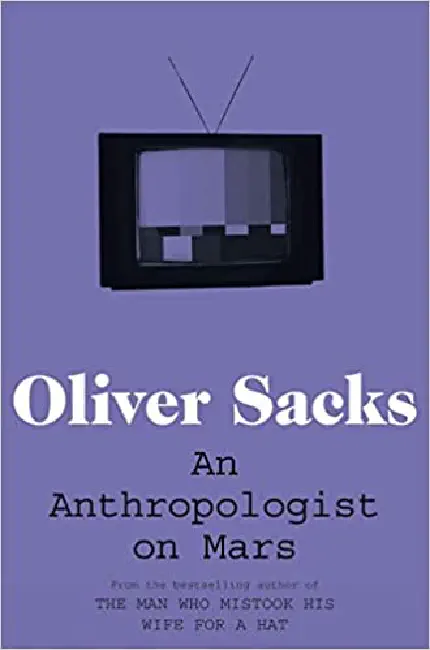
Open in new tab Cover image for An Anthropologist on Mars book

An Anthropologist on Mars

An Anthropologist on Mars: Seven Paradoxical Tales is a 1995 book by neurologist Oliver Sacks consisting of seven medical case histories of individuals with neurological conditions such as autism and Tourette syndrome. In addition, Sacks studies his patients outside the hospital, often traveling considerable distances to interact with his subjects in their own environments.

DOI: 10.1002/9781444324077

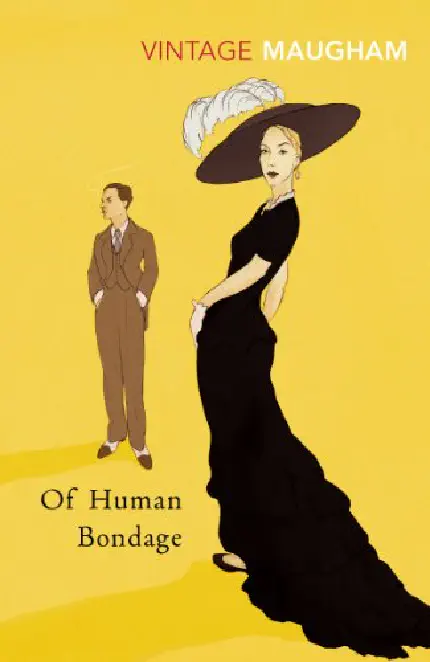
Open in new tab Cover image for Of Human Bondage book

Of Human Bondage

Of Human Bondage is the first and most autobiographical of Maugham's novels. It is the story of Philip Carey, an orphan eager for life, love and adventure. After a few months studying in Heidelberg, and a brief spell in Paris as a would-be artist, Philip settles in London to train as a doctor. And that is where he meets Mildred, the loud but irresistible waitress with whom he plunges into a formative, tortured and masochistic affair which very nearly ruins him.

DOI: 10.1002/9781444324078

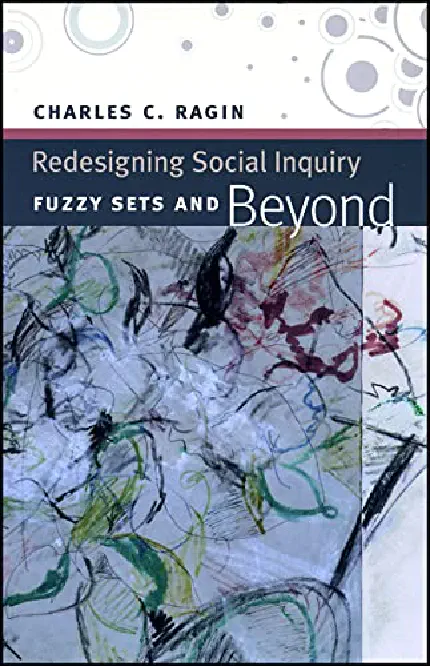
Open in new tab Cover image for Redesigning Social Inquiry book

Redesigning Social Inquiry

Redesigning Social Inquiry provides a substantive critique of the standard approach to social research—namely, assessing the relative importance of causal variables drawn from competing theories. Instead, Ragin proposes the use of set-theoretic methods to find a middle path between quantitative and qualitative research.

DOI: 10.1002/9781444324079

Open in new tab Cover image for Foundation book

Foundation

The Foundation novels of Isaac Asimov are among the most influential in the history of science fiction, celebrated for their unique blend of breathtaking action, daring ideas, and extensive worldbuilding. In Foundation, Asimov has written a timely and timeless novel of the best—and worst—that lies in humanity, and the power of even a few courageous souls to shine a light in a universe of darkness.

DOI: 10.1002/9781444324080

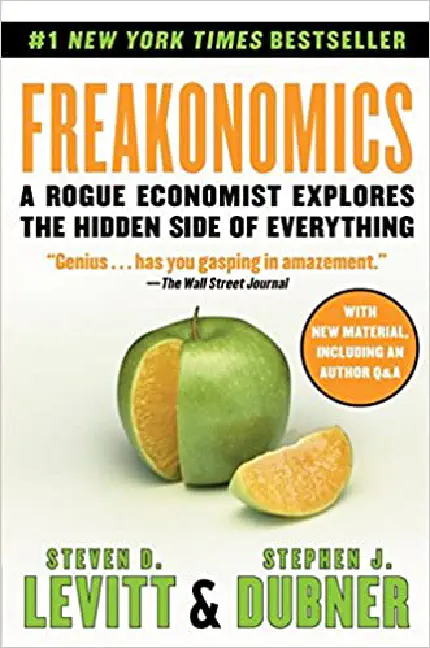
Open in new tab Cover image for Freakonomics book

Freakonomics

In this groundbreaking book, leading economist Steven Levitt—Professor of Economics at the University of Chicago and winner of the American Economic Association’s John Bates Clark medal for the economist under 40 who has made the greatest contribution to the discipline—reveals that the answers. Joined by acclaimed author and podcast host Stephen J. Dubner, Levitt presents a brilliant—and brilliantly entertaining—account of how incentives of the most hidden sort drive behavior in ways that turn conventional wisdom on its head.

DOI: 10.1002/9781444324082